October 17: Kyle’s recorded call tells Ankrum that work is ongoing, describes hot work next to operating service bays separated by plastic/plywood, and flags the alarm reset key. Ankrum says he will visit.
The original October 20 notice, based on an October 17 visit, describes sandblasting, painting and new pit grates and says “No permits are required.” It also includes a work-without-permit code reference. The revised notice omits that paragraph and code reference, retaining the alarm-key issue.
Ankrum’s October 20 email explains that the earlier copy had the work-without-permit reference and that Lynn suggested taking it off. This is the record’s wording; it documents a revision, not the reason for the legal interpretation or a finding that hot work was permitted.
The archive’s City Code §94.40 (PDF p.139) adopts the 2018 International Fire Code, with local amendments. The 2018 IFC §105.6.23 covers operational permits for portable hot-work equipment inside structures and §3501.2 points back to those permit provisions. The code includes a construction-permit exception and an approved hot-work-program route. Read the 2018 code provision.
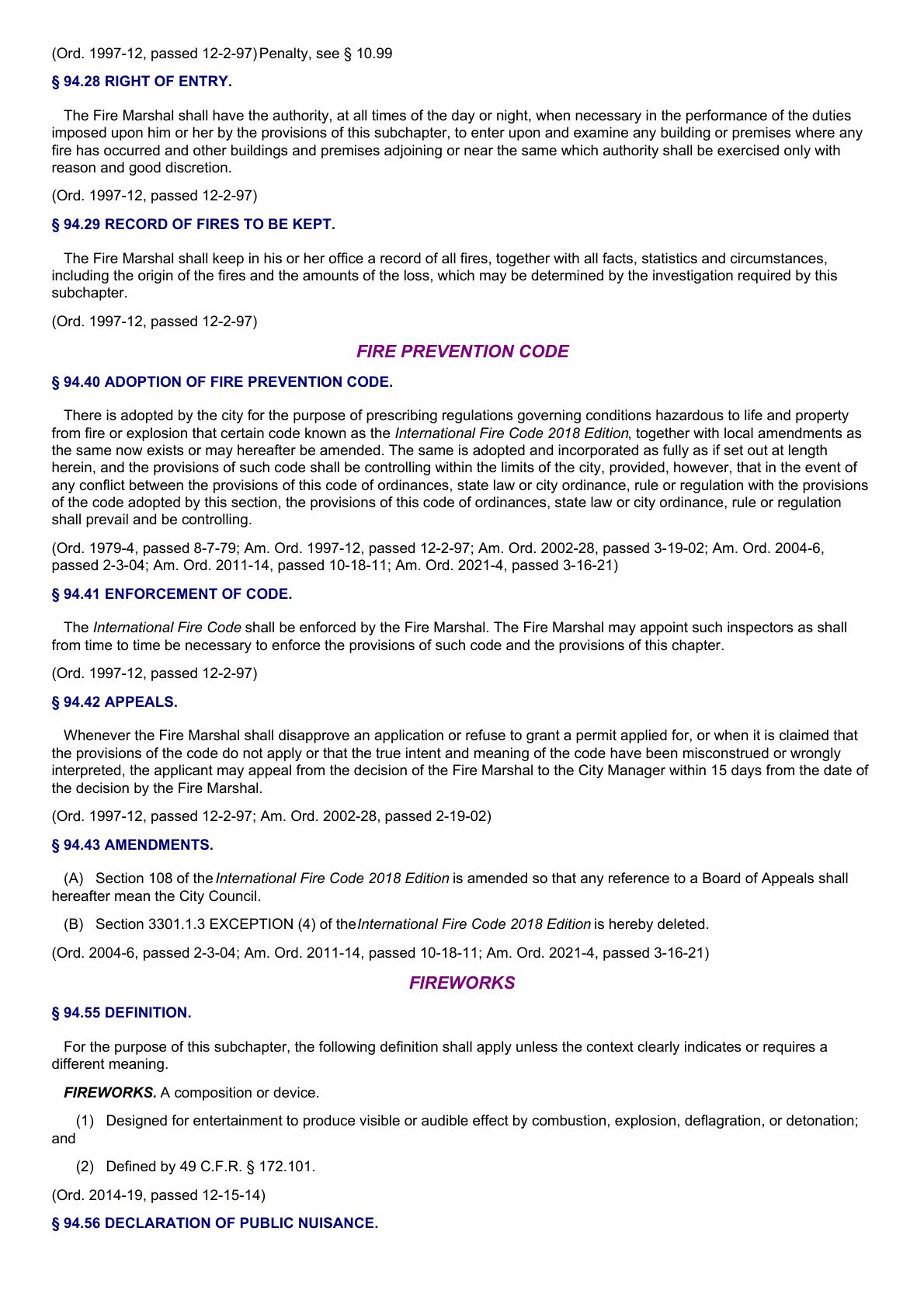
Kyle identifies the work as unpermitted hot work and disputes the City’s no-permit-required position. Compare his October 17 report and the actual work scope with any construction permit, hot-work operational permit, approved program and job permits, fire-watch/prework records, and the City’s explanation for the revision. None of those permit authorizations is established by the two letter versions. Their absence from selected sources is not a certification that none existed.
At the December 3 meeting, Vine responds to Kyle’s TLE/permit concerns by saying the City found issues and was making permitting/ordinance changes. The later March light-pole and concrete notices show new work beginning before permits, followed by approvals; they test prevention of recurrence without proving the older TLE project was never corrected.