Compare production formats and file histories with the information needed to check a record’s context, completeness and authenticity.
DAYTON FINDINGS · MOUNT PLEASANT FILES
Why email integrity and file history matter
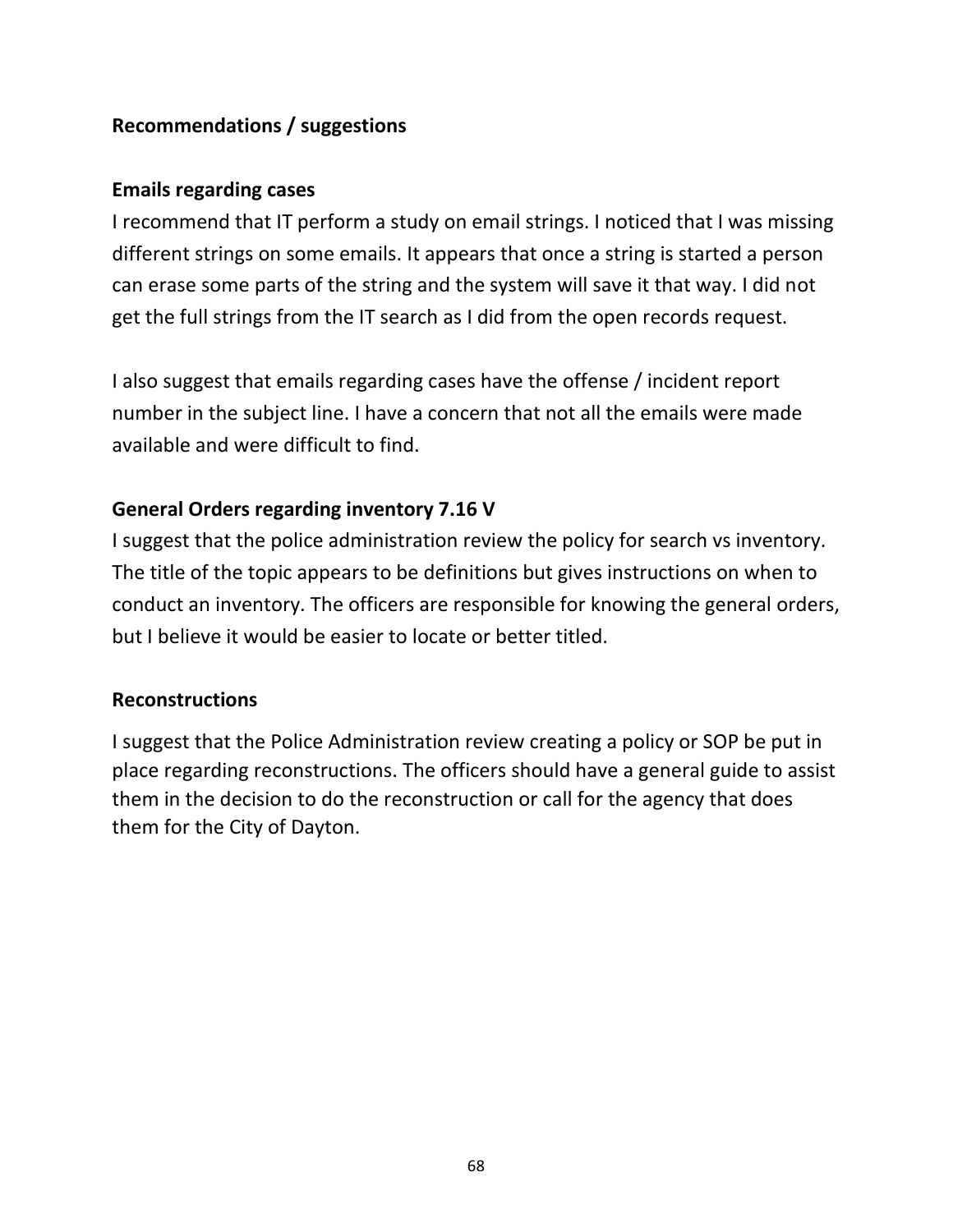
Prado’s observation
“I did not get the full strings from the IT search as I did from the open records request.”
On page 68, Prado recommends an IT study of email strings after finding differences between IT-search and open-records copies and difficulty locating some messages. Vine was Dayton’s police chief during the period discussed elsewhere in the report. This page-68 observation does not identify him as the cause of the missing portions or establish the same conduct in Mount Pleasant.
Jesse Prado · email-integrity recommendations · PDF p. 68Emails regarding cases · investigator’s recommendations
Selected page 68 of 69. Page references refer to this version of the source.
The connection is the ability to test whether a record is complete. Prado compared email threads obtained through different routes in Dayton. In Mount Pleasant, the Walmart search used an added AND participant condition, Moring asked to see the search summary, and later productions supplied identifiable messages. The received inspection and compensation files also show limited authorship and history fields. Each example has its own source and limits; together they show why search settings and retained file properties matter.
The inspected copies lack particular creator, producer or editing-history fields. Webster appears in the delivery workflow, but the files do not show whether those fields existed earlier or who changed them. These are the details needed to check a search or a document history, rather than a claim that their absence proves alteration.
What the files show
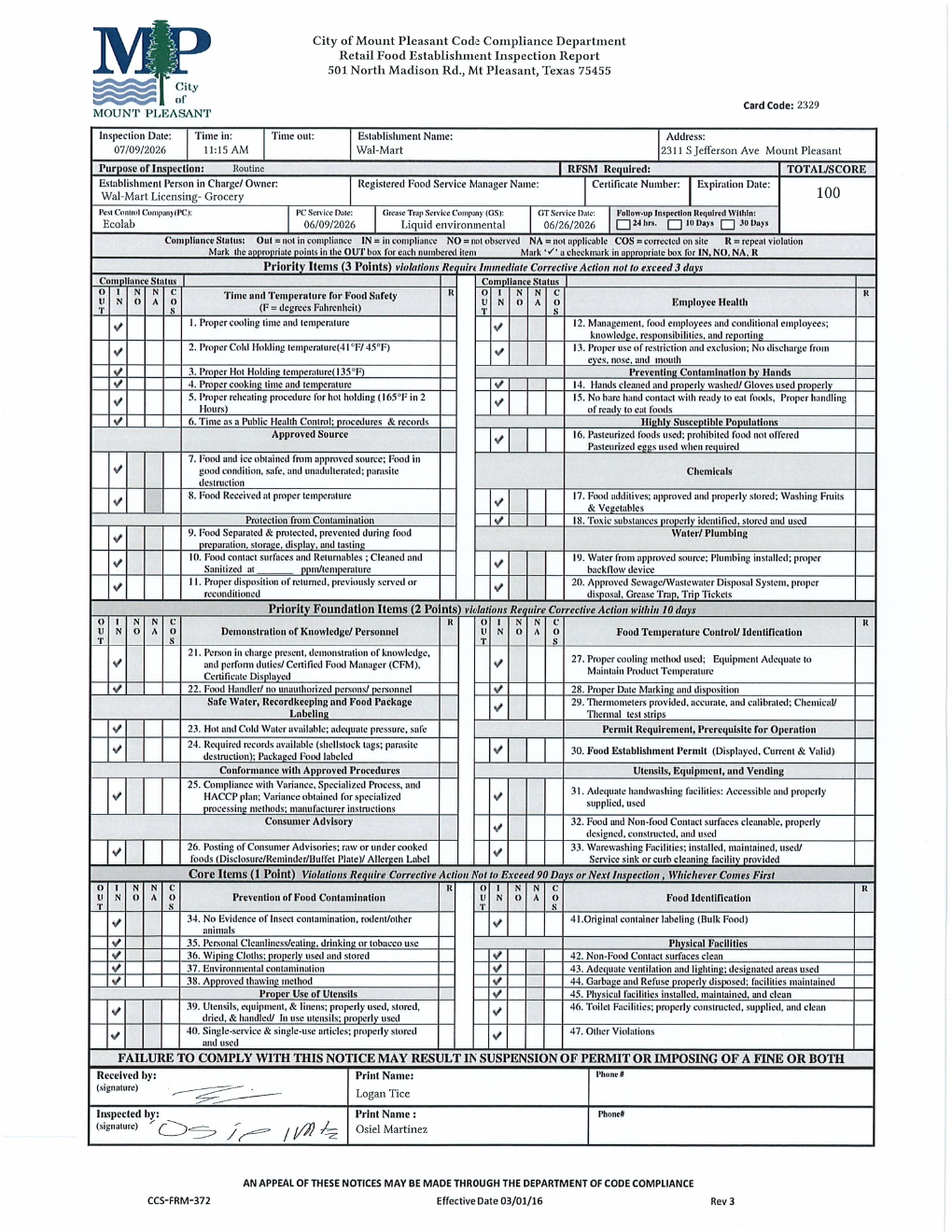
The 14-page July 9 annual inspection PDF, supplied July 23, has neither a standard PDF document-information dictionary nor an XMP metadata stream. That limits the creator, producer and creation-date information available in those standard fields.
Both compensation-production PDFs also lack those standard metadata containers. All five supplied Office files have blank or absent creator and lastModifiedBy fields; their core creation/modification timestamps fall on September 15, 2026. Other structure and metadata remain, so this is not a claim that all metadata was removed.
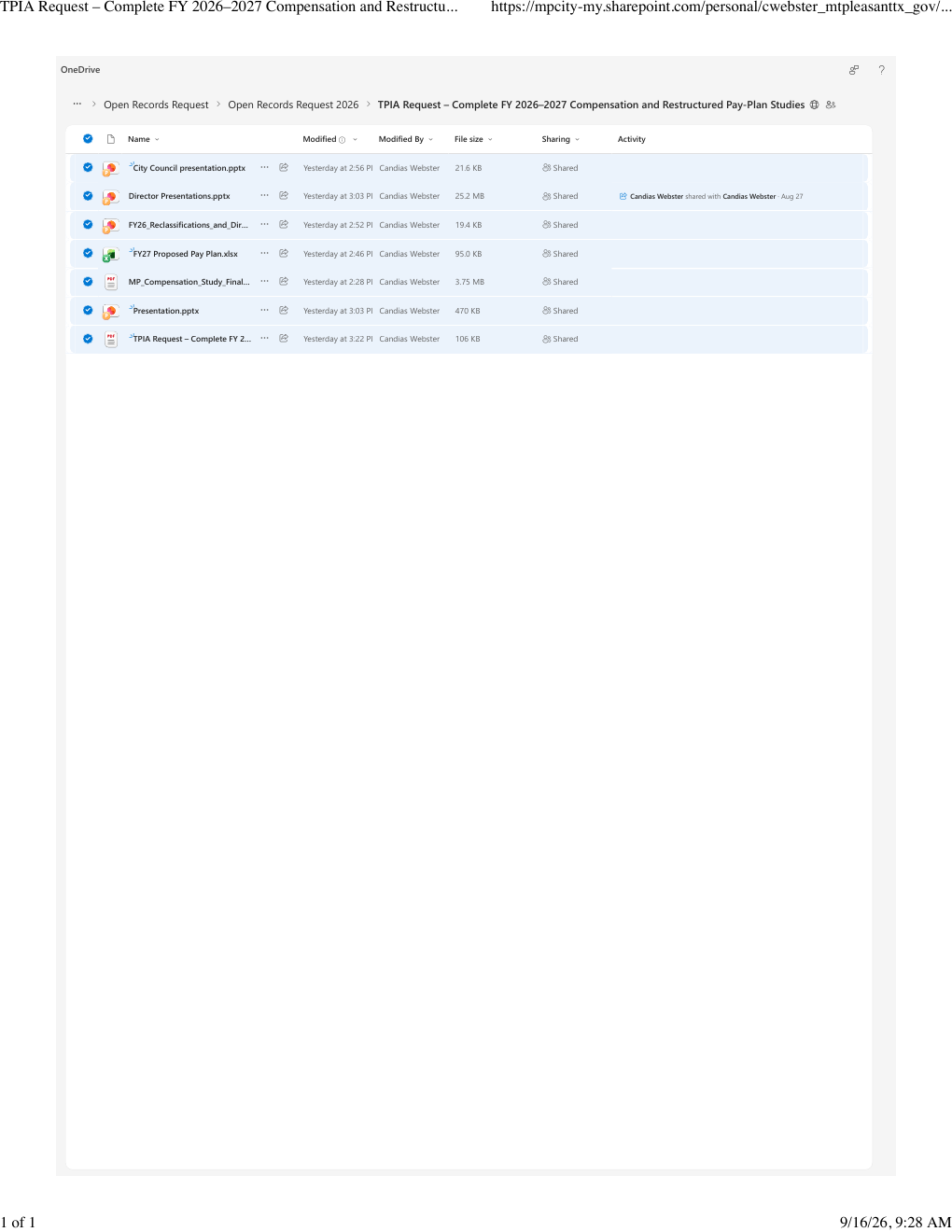
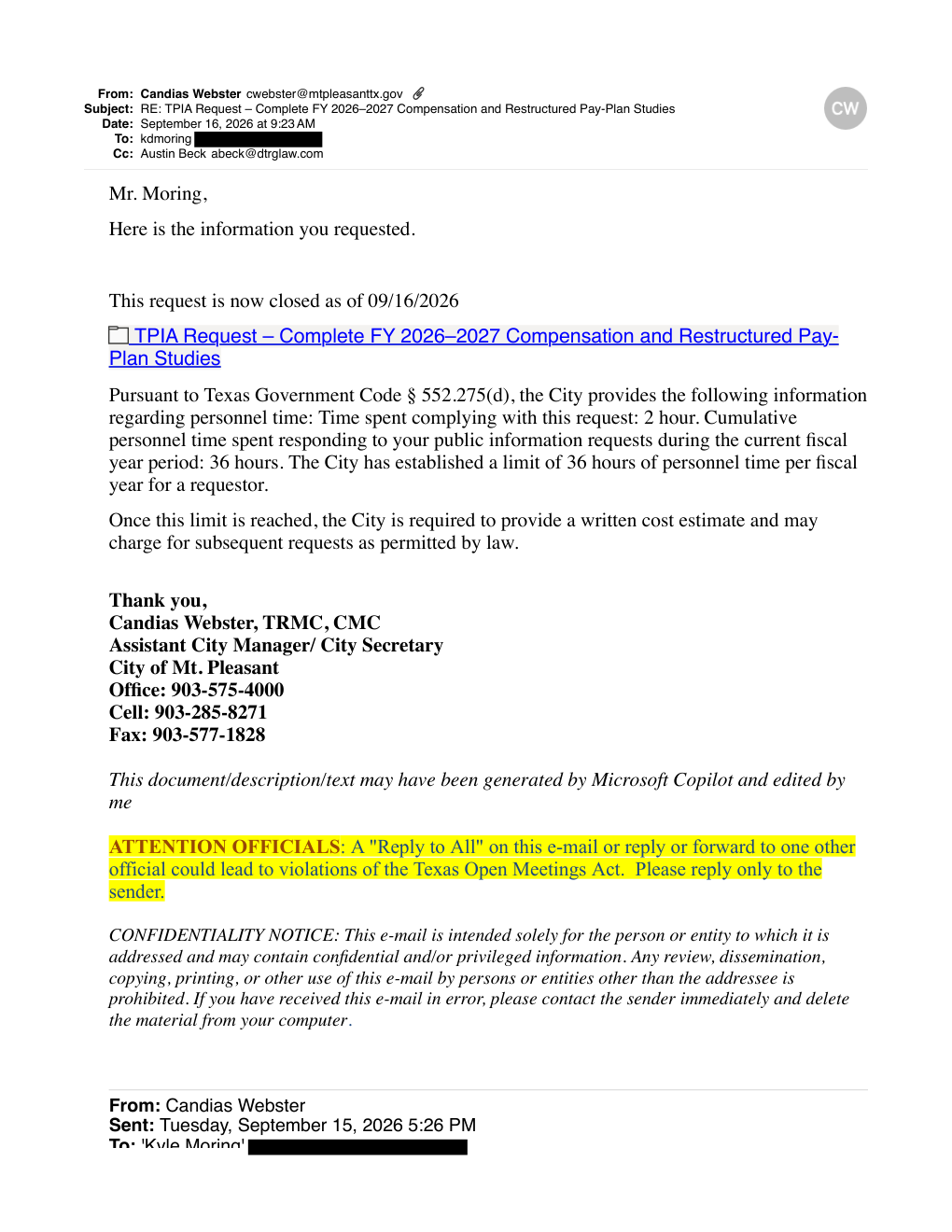
The saved September 16 SharePoint listing displays Candias Webster in the Modified By column for the seven delivered files. Her September 16 email transmits the production and closes the request. That ties her to the production workflow, but the listing does not identify which field or content was changed.
A SECOND FORMAT AND SCOPE EXAMPLE
The City telephone log update
Moring’s June 1 request sought a CDR update after the prior March 3 cutoff, through the time the City received the request. The June 2 workbook contained March 3 records. Webster closed that request, then wrote that no end date had been specified and directed a new paid request. The preserved June 1 text states an end date. Moring submitted the March 4-forward request and paid another $15 under protest.
Three retained deliveries show the changing presentation: an XLSX workbook, a 76-page PDF titled as March 3 records, and a 3,974-page PDF titled as March 3–June 1 records. Moring objected that the later PDF still ended before the replacement request’s export-time cutoff and did not preserve the structured spreadsheet format he requested. The reviewed thread does not show a date-range clarification before the first closure; it does not establish every communication or the City’s full system holdings.
These values are from the received director-pay presentation. Download the original to inspect its properties; the dated fields and all eight file fingerprints appear below.
Inspect the properties of all eight received files
Inspected the preserved files without changing them. Each of the seven compensation files byte-matches its member in the supplied ZIP. Office fields come from docProps/core.xml; PDF results concern the document-information dictionary and XMP, not every kind of internal PDF data. UTC timestamps and the SharePoint display are shown in their original forms without assuming the browser’s time zone.
Seven exact received files are available below in their supplied PDF, PowerPoint or Excel format so readers can check the properties themselves. The request PDF is offered as a privacy-screened viewing copy; its downloadable properties will differ from the inspected original. The proposed pay-plan workbook contains a City SharePoint reference, so no link update is needed to inspect its file properties.
No earlier version of these same eight files or system audit log has yet been matched to show whether the absent fields were once present, what operation changed them, or who performed it. Copying, conversion and export can also affect properties. Prado’s Dayton finding does not identify who altered an email thread, establish that Vine deleted emails, or prove misconduct in Mount Pleasant.
Read alongside the September 18 discussion
The question is whether the search and delivered files preserve enough information to verify completeness, authorship and history.
Wayne Dolcefino ↗ is an investigative journalist who formerly led ABC13 Houston’s 13 Undercover team and now leads Dolcefino Media. His reports below cover the Quiroz and Salazar families’ separate concerns about Dayton crash investigations. They are reporting and commentary, not findings that the same conduct occurred in Mount Pleasant.
The report discusses both families and the employment recommendation concerning Vine. The related November 18 announcement ↗ sets out the publisher’s account of their complaints. A Facebook posting ↗ is another way to watch the 2021 report, not a separate event.
The title and description report the family’s complaint and that an investigator was assigned. They do not establish a DOJ finding or the present status of any investigation.
This follow-up discusses the Salazar investigation, criticism of Vine and the later response to employment recommendations. It was published after the February 18 Mount Pleasant meeting; it could not have informed what the speakers knew at that meeting.
Compare the underlying records
Melancon report · PDF page 2 ↗ sustains a failure-to-reprimand concern in the Morales/Salazar matter and calls a false-report allegation inconclusive. Willard memorandum · PDF page 16 ↗ recommends retaining Vine’s roles and compensation; the matched records do not independently establish the final payroll outcome.
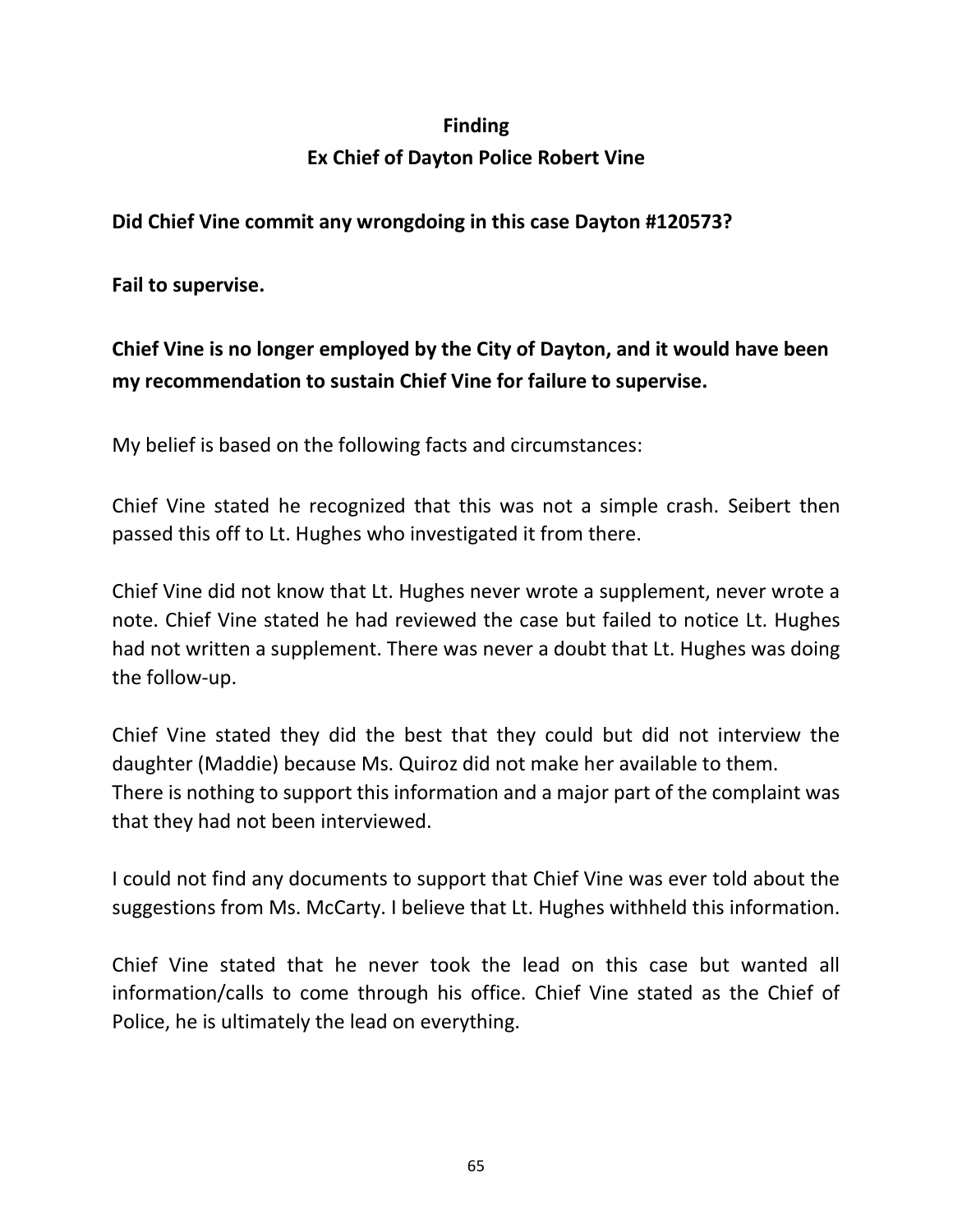
Prado report · selected page 65 ↗ discusses routing information through Vine, his response and a failure-to-supervise recommendation. Prado’s page-68 email observation ↗ concerns incomplete email strings; it does not identify who changed them or establish that Vine deleted messages.
The video descriptions and dates are attributed to Dolcefino Media. The linked time positions are approximate caption-based locators, not newly verified quotations. External videos remain on the publisher’s platforms.
Native files, metadata and record integrity | Mount Complacent